
High-Performance Gas Filter for Industrial Gas Filtration
Parth Engineering offers Gas Filters for industrial and process applications where unwanted solid particles, dust, suspended contaminants and other particulate matter need to be removed from gas streams. Gas filtration is an important part of many industrial processes because clean gas can help protect downstream equipment, improve process reliability and maintain the required quality of the gas stream.
Gas Filters are designed to provide controlled particulate filtration in suitable gas-processing systems. Depending on the application, the filter can be selected according to the type and concentration of contaminants, required filtration level, gas flow rate, operating pressure, operating temperature and system configuration.
Gas filtration can be required at different points within an industrial process. A Gas Filter may be installed as a pre-filtration stage to protect downstream equipment, as a process filtration stage to control particulate contamination, or as a final filtration stage where a cleaner gas stream is required.
What Is a Gas Filter?
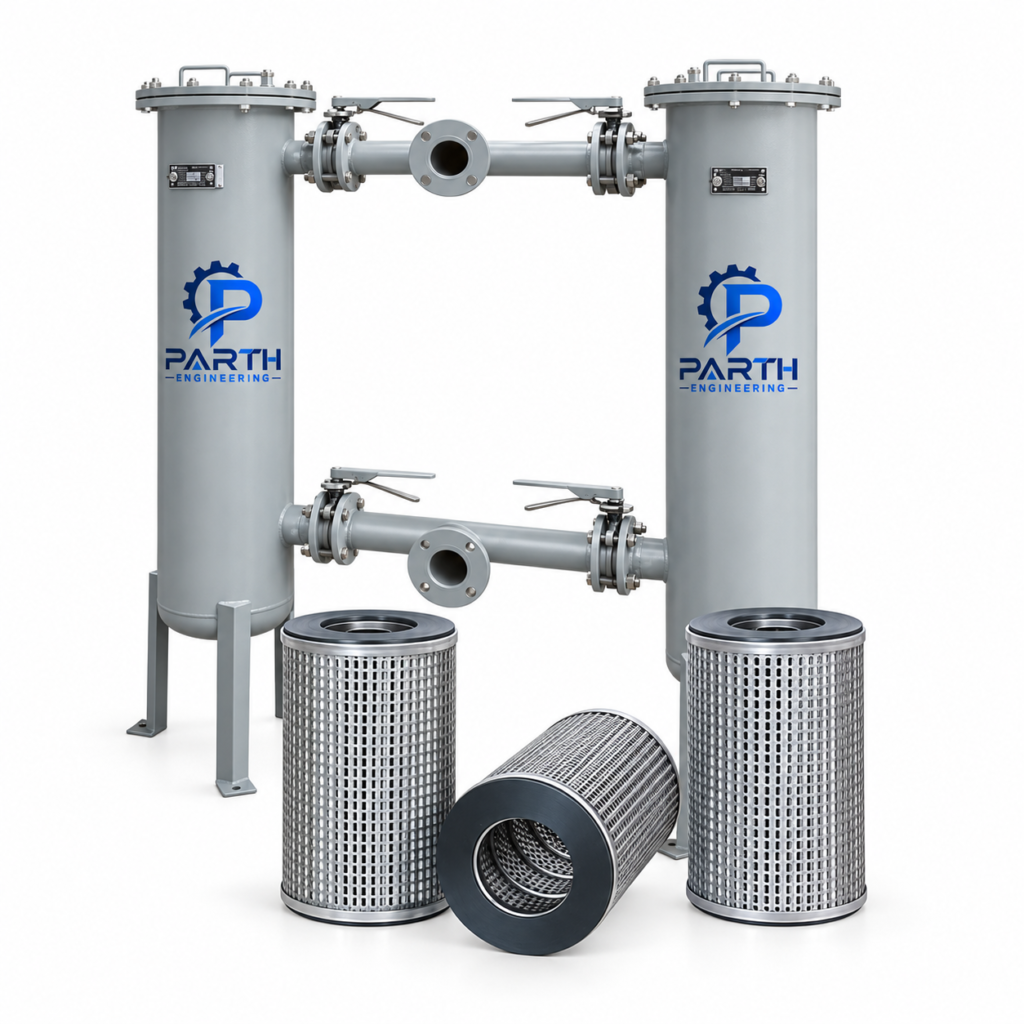
A Gas Filter is a filtration device designed to remove unwanted particulate contaminants from a gas stream. During operation, contaminated gas enters the filtration system and passes through the selected filter media. Particles such as dust, dirt, rust, process solids and other suitable particulate contaminants are retained by the filtration media while the filtered gas continues through the system.
Gas Filters are different from liquid filtration products because gas properties, flow characteristics, pressure and temperature can significantly influence filter performance.
The filter media, housing construction and sealing arrangement should therefore be selected according to the gas service and operating conditions.
Gas Filters can be used in a variety of industrial applications where controlling particulate contamination is important for process protection, equipment protection or gas-quality requirements.
How Gas Filters Work
The working principle of a Gas Filter is primarily based on mechanical filtration of particulate contaminants from a gas stream. Contaminated gas enters the filter housing through the designated inlet connection. The gas then flows through the filtration media.
As the gas passes through the filter media, particulate contaminants are retained according to the characteristics and filtration capability of the selected media. The filtered gas exits through the outlet connection and continues to the next stage of the process.
As contaminants accumulate on the filtration media, resistance to gas flow can increase. This can result in an increase in differential pressure across the filter. Monitoring differential pressure and process performance can help determine when the filter element requires cleaning, servicing or replacement.
The actual filtration performance depends on the filter media, particle characteristics, gas flow rate, operating pressure, temperature and system configuration.
Key Features of Gas Filters
Gas Filters provide several useful characteristics for industrial gas-filtration applications.
Designed to remove suitable solid particles and contaminants from gas streams.
Suitable for compatible industrial and process-gas applications.
Filter media can be selected according to the required particle-retention level.
Helps reduce particulate contamination reaching downstream equipment.
Can be used as a preliminary filtration stage in multi-stage systems.
Suitable for applications where particulate contamination needs to be controlled during processing.
Depending on the design, filter elements can be serviced or replaced according to operating requirements.
Filter size, media and construction can be selected according to process requirements.
Advantages of Gas Filters
Gas Filters can provide an effective solution for controlling particulate contamination in suitable industrial gas systems. One of the primary advantages is protection of downstream equipment. Dust and other solid contaminants can enter process equipment and potentially affect valves, instruments, compressors, regulators and other components. A suitable gas filtration stage can help reduce the amount of particulate matter reaching these components.
Gas Filters can also support process reliability by maintaining a cleaner gas stream. The filtration system can be configured according to the required gas flow rate, filtration level and operating conditions.
Another advantage is the ability to incorporate gas filtration into different stages of an industrial process. Depending on the application, the filter may be used for pre-filtration, intermediate filtration or final particulate filtration.
Gas Filtration Technology
Gas filtration technology uses specially selected filtration media to retain particulate contaminants from gas streams. The filtration mechanism can involve different particle-retention principles depending on the filter media and particle characteristics. Larger particles may be captured through direct interception, while smaller particles can be retained through other filtration mechanisms within the media structure.
Important factors affecting gas filtration include:
- Particle size
- Particle concentration
- Gas flow rate
- Gas composition
- Gas viscosity
- Operating pressure
- Operating temperature
- Required filtration rating
- Differential pressure
- Filter media characteristics
The filtration system should be designed and selected according to the actual process conditions.
Applications of Gas Filters
Gas Filters can be considered for a wide range of suitable industrial applications.
-
Compressed Gas Filtration
Gas Filters can be used in suitable compressed-gas systems to reduce particulate contamination before the gas reaches downstream equipment.
-
Process Gas Filtration
They can be incorporated into industrial process-gas systems where particulate contamination needs to be controlled.
-
Instrument Air Filtration
Suitable Gas Filters can be considered for instrument-air systems where particulate contamination needs to be reduced to protect sensitive components.
-
Equipment Protection
Gas Filters can be installed upstream of sensitive equipment to reduce the possibility of particulate contamination entering the equipment.
-
Gas Pre-Filtration
They can be used as a pre-filtration stage before finer filtration or other gas-treatment processes.
-
Industrial Gas Systems
Gas Filters can be evaluated for compatible industrial gas applications where particulate filtration is required.
Industries Served
Gas Filters can support suitable filtration requirements across industries such as:
Filter housings and filtration consumables for efficient and dependable process filtration.
Filter bags and liquid filtration products for industrial processing applications.
Gas filtration products for effective filtration and process control.
Butterfly valves for reliable industrial flow regulation and isolation.
Delrin rods and sheets for industrial fabrication and engineering requirements.
Product configurations and solutions based on specific industrial application requirements.
Gas Filter Construction
The construction of a Gas Filter is an important consideration because gas systems can operate under different pressure and temperature conditions. A typical gas-filtration arrangement may include a filter housing, filtration element, sealing components, inlet and outlet connections and suitable support components.
Important construction considerations include:
- Housing material
- Filter media
- Filter element configuration
- Sealing arrangement
- Connection size
- Inlet and outlet configuration
- Operating pressure
- Operating temperature
- Gas compatibility
- Required filtration rating
The construction should be selected according to the application and process conditions.
Gas Filter Filtration Rating
Filtration rating determines the approximate particle size that the filter is intended to retain under specified conditions. The appropriate filtration rating should be selected according to the process requirement. A finer filtration rating can provide greater particle retention but may also result in increased pressure drop and potentially shorter service life when the particulate loading is high.
Important considerations include:
- Required particle removal
- Particle-size distribution
- Gas flow rate
- Particle concentration
- Acceptable pressure drop
- Downstream equipment requirements
- Required gas quality
The final filtration rating should always be selected according to the actual application.
Gas Filter and System Compatibility
Gas Filters should be properly matched with the gas-filtration system.
Important compatibility parameters include:
- Inlet connection
- Outlet connection
- Housing dimensions
- Filter element dimensions
- Flow direction
- Operating pressure
- Operating temperature
- Sealing arrangement
- Gas compatibility
Correct installation helps ensure that the gas follows the intended filtration path. Proper sealing is particularly important in gas-filtration systems because leakage or bypass can reduce the effectiveness of the filtration process.
Gas Filters for Equipment Protection
Particulate contamination can affect sensitive equipment used in industrial gas systems. Gas Filters can be installed upstream of equipment such as valves, regulators, instruments, compressors and other suitable process components.
By reducing particulate contamination in the gas stream, the filtration stage can help protect downstream equipment from unwanted solid particles. The appropriate filter rating and configuration should be selected according to the protection requirements of the equipment.
Gas Filters for Compressed Gas Systems
Compressed gas systems can contain particulate contaminants generated from the gas source, piping, storage equipment or process environment. A suitable Gas Filter can be installed in the compressed-gas line to reduce particulate contamination.
The filter housing and filtration element should be rated for the system’s operating pressure and temperature. Flow capacity and pressure drop are also important considerations when selecting a Gas Filter for compressed-gas applications.
Factors Affecting Gas Filter Performance
Several factors can influence Gas Filter performance and service life.
Particle Concentration: Higher particulate loading can cause faster filter loading.
Particle Size: Particle-size distribution influences filtration performance and pressure drop.
Gas Flow Rate: Higher flow rates can increase pressure drop across the filter.
Gas Composition: The gas should be compatible with the selected filter materials.
Operating Pressure: Filter housing and element construction must be suitable for the system pressure.
Operating Temperature: Temperature can influence gas properties and material suitability.
Filtration Rating: The selected rating determines the required level of particulate retention.
Differential Pressure: Increasing differential pressure can indicate contaminant loading and the need for filter replacement.
How to Select the Right Gas Filter
Selecting the correct Gas Filter requires evaluation of the complete gas-filtration application.
Important factors include:
- Required flow rate
- Process media
- Required filtration level
- Filter cartridge type
- Cartridge dimensions
- Number of cartridges
- Operating pressure
- Operating temperature
- Housing material
- Seal material
- Inlet connection
- Outlet connection
Request a Quote for Gas Filters
Looking for a Gas Filter for process gas, compressed gas, instrument air, industrial gas filtration or downstream equipment protection? Share your gas type, gas composition, flow rate, particle characteristics, required filtration rating, operating pressure, operating temperature and existing system specifications with Parth Engineering.
Our team can help you explore a suitable Gas Filter configuration based on your specific industrial gas-filtration requirements.