
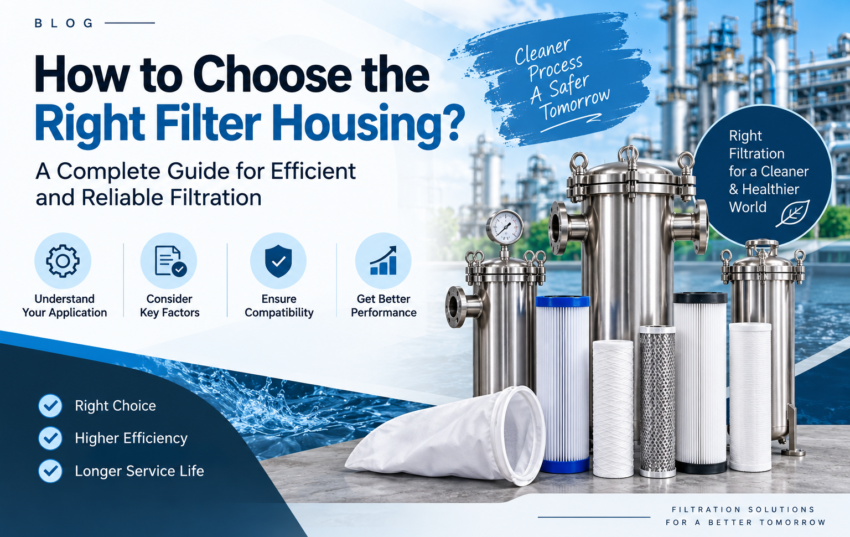
Choosing an SS filter housing manufacturer in Ahmedabad is not simply a search for a stainless vessel and the lowest quotation. The right housing must suit your liquid, target flow, particle load, operating pressure, temperature, filter element, and cleaning routine. One wrong assumption can cause excessive pressure drop, leakage, short element life, or an avoidable shutdown. Parth Engineering helps industrial buyers begin with application details, so the proposed configuration has a technical basis. This guide explains what to compare, which questions to ask, and how to prepare a quote-ready requirement without getting lost in vague product claims or unnecessary jargon.
Select an SS filter housing by matching five factors: process chemistry, flow, filtration target, operating limits, and maintenance. Then verify material grade, seal compatibility, element format, connection standard, closure, surface finish, and documentation. Share the inputs with Parth Engineering for configuration and quotation.
What Is an SS Filter Housing?
An industrial filter housing is the pressure-containing body that holds a replaceable cartridge, bag, basket, or another filtration element. Liquid enters through the inlet, passes across the element, and leaves through the outlet while unwanted solids remain behind. The element performs separation; the housing keeps it aligned, sealed, and safely contained under specified conditions.
An SS filter housing uses stainless steel for its principal wetted construction. Depending on the process, buyers may evaluate different grades, seal materials, connection styles, finishes, and closure arrangements. The correct choice depends on actual service, not a grade name alone.
Industrial equipment should not be confused with household filters, a domestic house filter, or the reversed search phrase housing filter. Industrial systems can involve higher flow, pressure, temperature, solids loading and documentation needs. Parth Engineering’s published range includes stainless cartridge, multi-cartridge, water, bag and basket filtration products for varied industrial filtration enquiries and process duties.
How to Select an SS Filter Housing Manufacturer?
Confirm Chemistry and Process Duty
Start with the fluid because compatibility controls later decisions. State its name, concentration, pH, viscosity, density, and suspended solids. Mention whether it is water, oil, solvent, syrup, chemical solution, or another process liquid. Identify chlorides, acids, oxidisers and contamination risks. Stainless that performs well in clean water may behave differently in hot or concentrated service.
Provide normal and maximum temperatures, including cleaning or sterilisation cycles. Identify whether the process is continuous, batch, recirculating or occasional. For regulated or purity-sensitive service, define contact-surface and cleanability expectations before fabrication. The eCFR equipment-construction principle requires product-contact surfaces in covered pharmaceutical operations to avoid reactive, additive, or absorptive effects.
Ask the supplier to confirm wetted parts, not describe the body as stainless. Drains, vents, supports, seals, and element hardware may contact the process. A stainless steel filter housing should therefore be specified as one material system. Record chemical concentration and temperature together, since compatibility can change when either rises. This first CLEAR check prevents unsuitable choices and gives the quotation a defensible process basis.
Calculate Load, Flow and Filtration Target
Define what the system must remove and how much liquid must pass. Give normal and peak flow, expected particle size, solids concentration, and the specific required downstream result. “Clean water” is not measurable. A useful target describes equipment protection, clarification, visible-solids reduction, or a validated process limit. Specify whether the micron rating is nominal or absolute whenever that distinction matters.
Provide available inlet pressure, required outlet pressure, and permitted clean and dirty differential pressure. A small unit may fit the pipe yet restrict production; an oversized unit may increase cost, hold-up volume, and cleaning work without improving filtration.
Never choose a water filter size from line diameter alone. Flow also depends on viscosity, temperature, element area, contaminant load, and acceptable service interval. These inputs determine element quantity and housing geometry. A multi-element design can provide more area for greater flow or longer runtime, but only with sound distribution. Ask for the sizing basis, expected initial differential pressure, and recommended changeout trigger. Better sizing converts guesswork into a workable operating plan.
Choose the Element and Housing Format
Choose the filtration format after defining chemistry and duty. A cartridge filter housing suits finer filtration, polishing, and duties needing disposable or cleanable media. Confirm cartridge length, diameter, end connection, seal arrangement, and quantity. The phrase filter holder may describe a support, while some purchase lists use filter holder comp; neither term is complete without an element drawing or interface dimensions.
A bag filter housing can suit liquids with moderate or heavier solids where a bag provides convenient element removal. State bag size, collar style, support basket, and filtration rating. Confirm how the opening seals, because bypass can defeat the media.
Basket housings suit solids, equipment protection, and duties where operators prefer a reusable screen. Basket filters & strainers require open area, perforation or mesh, capacity, and cleaning frequency, not only nozzle size. If cleaning cannot stop production, discuss duty-and-standby or duplex arrangements. Treat housing and elements as one system: a strong vessel cannot correct a poorly seated cartridge, unsupported bag, or undersized basket. Request an internal drawing when interchangeability matters.
Verify Engineering Limits, Material and Finish
Translate process conditions into a mechanical specification. List normal, minimum, and maximum operating pressure and temperature, plus required design conditions. Include vacuum, surge, water hammer, blocked outlet, thermal expansion or cleaning conditions when credible. Review pressure-containing housing against the code, plant standard, and inspection rules applicable to its installation.
Select stainless grade from fluid compatibility, temperature, cleaning chemicals, contamination risk, and service life. Confirm wetted and non-wetted materials separately, including seals, element hardware, and surface treatment. A stainless filter housing for utility duty may need different documentation and finish from sanitary or high-purity service.
Define inlet and outlet size, rating, standard, and orientation. Add vent, drain, gauge, or differential-pressure tapping needs. Check element-removal clearance and safe closure access. Heavy lids may require a hinge, davit, or lifting provision. Specify supports and flow direction.
A Clean Filter Housing brief should define “clean”: drainability, internal finish, crevice control, cleaning method, residue limit, or inspection access. Request confirmed drawings and datasheets. This check protects safety, fit-up, and maintenance without relying on unverified ratings.
Review Documentation, Installation and Support
The final CLEAR check evaluates how the supplier converts requirements into a controlled deliverable. Send one duty sheet covering fluid, flow, solids, micron target, pressure, temperature, materials, seals, elements, connections, finish, quantity, and documents. Ask for exceptions to be marked clearly.
Project documentation may include an approved drawing, material records, inspection plan, dimensional report, pressure-test record, finish record, operating guidance and recommended spares. Never infer a certification or code stamp from appearance; obtain explicit confirmation.
Plan installation and maintenance while buying. Confirm isolation, depressurisation, drainage, venting, lifting space, and element-removal clearance. Define differential-pressure monitoring. Opening a housing before pressure is released can be dangerous, so site procedures and trained personnel remain essential.
Parth Engineering serves buyers seeking a filter housing manufacturer & Supplier in Ahmedabad, Gujarat. Its Ahmedabad location and published filtration range support direct industrial product enquiries. Final suitability still depends on confirmed application data. Send the requirement, review the configuration, and approve drawings before production.
SS Filter Housing Applications and Comparison
Different filter housings solve different solids-loading and filtration tasks. Use this quick comparison to shortlist a format, then confirm the selection against actual process data.
| Format | Best starting point | Key detail to confirm |
| Single cartridge | Point-of-use polishing or lower-flow duty | Cartridge interface, length and micron rating |
| Multi-cartridge | Higher flow or greater filtration area | Element count, distribution and removal clearance |
| Bag housing | Moderate or heavier solids loading | Bag size, sealing collar and support basket |
| Basket housing | Coarse solids and equipment protection | Mesh or perforation, open area and cleaning interval |
For water treatment, process liquids, oils, chemicals or utility lines, choose by contaminant behaviour rather than industry label. A compact SS cartridge filter housing can support fine polishing; an SS bag filter housing may simplify changeout for higher solids volume. Parth Engineering can develop a defined enquiry. Read how to choose the right filter housing for a detailed selection checklist for engineers.
Common Buying Mistakes
A mistake is requesting SS housing required without process data. It leaves chemistry, grade, seal, pressure, temperature, and element interface unresolved. Another is comparing quotations with different scopes. One may include gauges or documents that another excludes.
Buyers overfocus on purchase price and ignore element consumption, cleaning time, pressure loss, and shutdown cost. They may copy a drawing even though the fluid or production rate has changed. Using domestic search terms for industrial duty can create confusion, while assuming every stainless surface is automatically sanitary can create risk.
Avoid approving a housing before checking connection standards, orientation, removal clearance, drainability and spares. Finally, never open, service, or modify pressure-containing equipment without isolation, drainage, and verified depressurisation under your site procedure.
Conclusion
Parth Engineering offers an Ahmedabad-based route for buyers seeking an SS filter housing manufacturer in Ahmedabad and related industrial filtration solutions. Contact us today for an aligned quotation, review every confirmed specification, and approve the drawing before manufacture. That simple discipline improves fit, safety, serviceability, and long-term filtration performance.
Frequently Asked Questions
1. Which stainless steel grade is best for a filter housing?
There is no universal best grade. Selection depends on fluid chemistry, concentration, temperature, cleaning agents, contamination limits, required service life, and all expected regulatory obligations. Share complete process data, then confirm all wetted materials and seals in the approved specification.
2. Is a cartridge housing better than a bag housing?
Neither is always better. Cartridge systems often suit finer polishing and greater media choice. Bag systems can handle higher solids loads with convenient changeout. Compare target retention, flow, solids volume, pressure drop, disposal, routine maintenance time, and operator exposure needs.
3. How is an industrial filter housing sized?
Sizing considers peak flow, viscosity, temperature, contaminant load, selected media area, initial pressure drop, and acceptable changeout interval under dirty operating conditions. Pipe connection size alone cannot determine housing capacity. Ask for the sizing basis before approving the offered model.
4. What information does Parth Engineering need for a quotation?
Provide fluid name, flow, particle or micron target, solids load, operating and design pressure, temperature, material preference, seal compatibility, element type, connections, finish, quantity, installation orientation, and required inspection documents. Attach an existing drawing if relevant for accurate technical review.
5. How should an SS filter housing be maintained?
Follow the approved operating instructions and site safety procedure. Isolate, drain, vent, and verify zero pressure before opening. Inspect seals, closure parts, and internals; replace damaged components; clean compatible surfaces; reinstall the correct element; then check leakage carefully before restart.